
There Is No Such Thing As A ‘Completely Safe Cloud Network’ !
From: DazeInfo
By Amit Misra
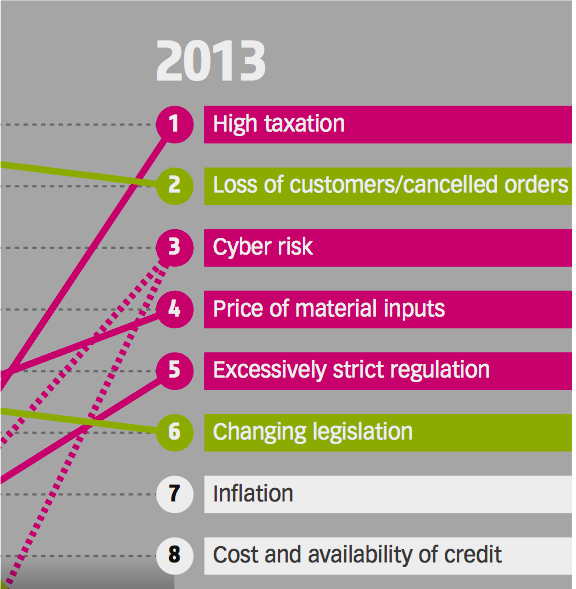
Cyber security is becoming one of the most important risk control concerns of global business. According to the Lloyd Risk Index 2013, cyber attacks came up as third in the list of business concerns, appearing on the biennial list for the first time (although US businesses rated it high in 2011 as well). The increased awareness of risk comes as a result of high-profile attacks and a change in the nature of cyber attacks. With more hacktivist and revenge hacking, the cost of attacks has increased. Lloyd’s cites an annual cost for cyber attacks of up to $46 million per year for some companies.
Along with an increased awareness of cyber security risks has come a wariness of using the cloud for business.
Security Concerns Keep People off the Cloud
When it comes to cloud computing, it’s very easy to think of bad cybersecurity scenarios. Your company’s data, and the data of your customers, is out there where anyone could potentially access it. This could lead to serious data theft that could reveal trade secrets, expose private information, and result in liability for negative consequences suffered by customers whose data was exposed. It may also cause irreparable damage to your company’s reputation.
To some extent, this fear keeps businesses off the cloud. According to Microsoft’s poll of small and medium businesses (SMBs) in France, Germany, the UK, and the US, 60% of businesses not adopting cloud services cited security concerns about the cloud, and 45% were concerned that they might lose control of their data.
A Ponemon Institute survey reported that about 46% of respondents had slowed or stopped implementation of cloud services due to security concerns.
The Good News: Data Is as Safe (or Safer) in the Cloud
However, Microsoft’s study shows that the reality for data is much different from what is feared. The study showed that 94% of SMBs got new security features with cloud computing than they had with their in-house computing solution. These features include: constant updating of software and hardware, up-to-date antivirus, and spam email management.
In addition, 62% of companies actually saw evidence of improved privacy after switching to cloud computing., while 91% of respondents felt their security had improved after switching to cloud-based services. These survey responses show that businesses who move to the cloud are actually likely to experience security benefits, despite their concerns.
The Bad News: How Safe Is That?
| Print article |