From: OzarksFirst.com
By Callie Rainey
SPRINGFIELD, Mo. – A tough winter for honeybees. An annual survey released by the Bee Informed Partnership showed another tough winter for the honeybee’s with an average winter colony loss rate of 28 percent.
Universities, extension offices, research labs and bee health organizations come together to survey beekeepers.
Watch/Read Complete Story
May 12, 2016
From: American Council on Science and Health
By Hank Campbell
***
He said much the same thing last May, and implicated parasites. “Our biggest surprise was the high level of varroa, especially in fall, and in well-managed colonies cared for by beekeepers who have taken steps to control the mites. We knew that varroa was a problem, but it seems to be an even bigger problem than we first thought. Moreover, varroa’s ability to spread viruses presents a more dire situation than we suspected.”
Indeed. They are, as he called them, dirty hypodermic needles that are a vector for viruses.
May 11, 2016
From: Phys.org
 This chart presents ten years’ worth of results from an annual survey of honey bee colony loss conducted by the Bee Informed Partnership. Originally designed to only track winter losses, the survey began tracking summer (and therefore total annual) loss rates in the year spanning 2010-2011. Credit: Bee Informed Partnership/University of Maryland
***
The researchers note that many factors are contributing to colony losses. A clear culprit is the varroa mite, a lethal parasite that can easily spread between colonies. Pesticides and malnutrition caused by changing land use patterns are also likely taking a toll, especially among commercial beekeepers.
May 10, 2016
From: Bee Informed
The National Honey Bee Disease Survey investigates honey bee apiaries throughout the US to see if three exotic honey bee pests are still absent from our shores. Samples collected from 41 states and two territories reveal that we are still free of the Tropilaelaps mite, Slow bee paralysis virus, and the Asian honey bee Apis cerana. If you think varroa is tough to manage, its diminutive cousin Tropilaelaps can reproduce much faster, resulting in many more mites feeding on developing honey bee larvae. We don’t want any of these three exotics as they would add additional stress and pressure to honey bee health.
May 9, 2016
From: Science 2.0
Researchers at the University of Maryland and the U.S. Agriculture Department recently found that several parasites and the diseases they vector into honey bee colonies are the source of most of the bee health problems and supposed ‘die-offs’ observed in recent years[1].
Incidence of some relatively newly discovered honey bee viruses is skyrocketing while three exotic and destructive threats to honey bees have yet to make it to U.S. shores.
Read Complete Article
May 6, 2016
From: Greenhouse Management
AmericanHort’s Jill Calabro gives us the latest scoop on neonics and pollinators.
Matt McClellan
***
May 5, 2016
From: AgProfessional
By Agricultural Retailers Association
***
ARA supports the use of risk-based assessments in understanding factors that may impact honey bee and native pollinator health. EPA needs to use widely accepted, peer-reviewed science and methodologies as it relates to any preliminary pollinator assessment for imidacloprid or other critical agricultural pesticide products.
The key to any short-term and long-term solution to improve pollinator health is through a diverse public-private partnership that brings together all impacted segments such as agribusinesses, farmers, commercial beekeepers, government agencies, conservation groups, manufacturers, and food processors. Read ARA’s comments to EPA…
Read Complete Article
May 4, 2016
From: Agri-News
WEST LAFAYETTE, Ind. — Rising levels of atmospheric carbon dioxide have reduced protein in goldenrod pollen, a key late-season food source for North American bees, a Purdue University study shows.
Researchers found that the overall protein concentration of goldenrod pollen fell about one-third from the onset of the Industrial Revolution to the beginning of the 21st century.
Read Complete Article
May 3, 2016
From: Lancaster Farming
Source: American Association for the Advancement of Science.
***
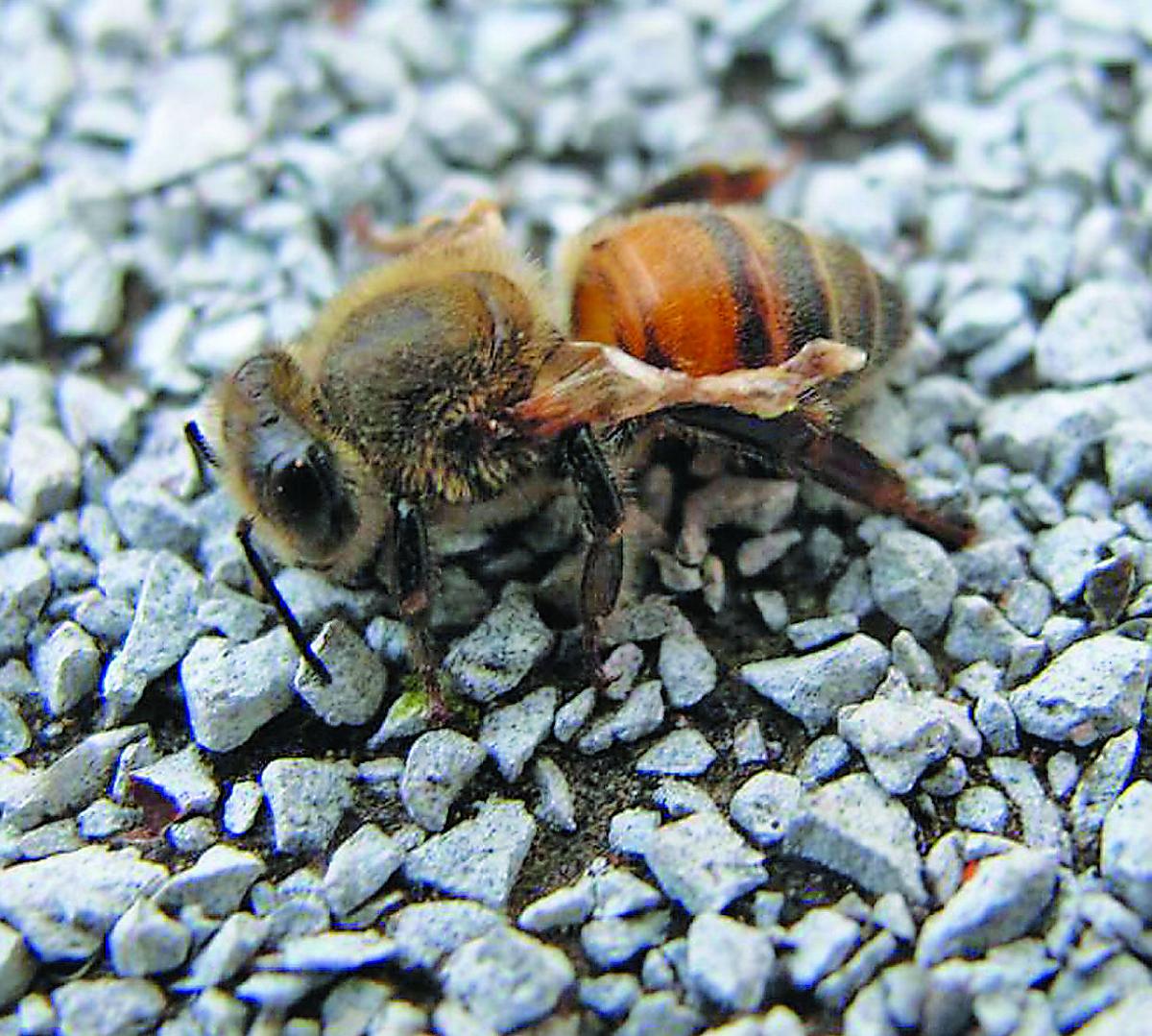
Key findings show that the varroa mite, a major honeybee pest, is far more abundant than previous estimates indicated and is closely linked to several damaging viruses.
Also, the results show that the previously rare Chronic Bee Paralysis Virus has skyrocketed in prevalence since it was first detected by the survey in 2010.
Read Complete Article
May 2, 2016
From: National Daily Press
***
Research in the Flenniken lab is aimed at better understanding how multiple biotic factors such as viruses, bacteria, fungi and mites affect colony losses with other factors such as agrochemicals and weather events.
“It isn’t just one factor” that’s responsible for colony losses,” Flenniken said. “Currently, researchers are focused on determining how multiple, synergistic factors cause the death of a colony.”
Read Complete Article
April 29, 2016
Next page
Previous page
