From: EurActiv
Belgium and France are EU’s bee mortality hotspots
By Romain Loury | JDLE | Translated By Samuel White
The European Food Safety Authority (EFSA) has published figures on the loss of bees in the EU. Belgium tops the list for winter mortality, and France for the beekeeping season. EurActiv’s partner Journal de l’Environnement reports.
Funded by the European Commission and carried out by the EU Reference Laboratory for bee health in France, the EPILOBEE study examined the mortality rates in 5,798 honey bee colonies across 17 EU countries between autumn 2012 and summer 2014.
May 26, 2016
From: FG Insight
One of the biggest attractions of Brexit for many is the potential for the UK to develop a more science-led approach to pesticides and plant technology. But has that argument been damaged by the events of the past week?
BY Alistair Driver
George Eustice’s decision to reject the NFU’s application for a derogation from the EU neonicotinoid ban has added further fuel to the Brexit debate.
***
Neonicotinoid application
This position came in for further scrutiny in the wake of the decision by Mr Eustice to reject the latest NFU/AHDB application for a derogation from the current EU neonicotinoid ban.
May 25, 2016
Editor’s Note: Cross-posted from OIRA Watch.
Via: KTIC Radio
BY DTN/Progressive Farmer
New regulations that would require pesticide makers to begin submitting more data to the Environmental Protection Agency (EPA) on how their products affect pollinators are set to be proposed before President Barack Obama leaves office.
***
EPA plans to formally propose the rule in January, according to the Office of Information and Regulatory Affairs (OIRA) May 18 regulatory agenda update.
Read Complete Article
May 24, 2016
From: TheRecord.com
***
A bit more research would have shown her the following facts. The number of honey bee colonies is not plunging according to Statistics Canada but rather up 40 per cent in Ontario since neonic seed treatment started in 2004.
***
Health Canada concluded in January 2016 that there was “no potential risk to bees” from use of a major Canadian neonic seed treatment and that neonic seed treatments reduced crop losses in Ontario by more than $100 million annually. Finally, a recent multi-year National Honey Bee Disease Survey found that varroa mites and other pests and diseases are the dominant cause of bee deaths in the United States.
May 23, 2016
From: The Progressive Farmer | Production Blog
By Pam Smith, Crops Technology Editor
***
That fact was also confirmed by several pollinator studies that landed in my email last week. I’m a hobby bee wrangler by definition of these studies and since they’ve come out there have been multiple articles written about how to analyze the numbers and how the results are not comparable because the data is gathered differently. I get nervous when it takes more pages to describe how to interpret the results than the studies themselves.
May 20, 2016
From: SciDev.net
Speed read
- Varroa mites are becoming resistant to pesticides used in richer nations
- Unlike Western beekeepers, African ones allow bees to abandon hives
- Most mites are left behind when this happens
Traditional African beekeeping methods offer better protection against hive-destroying varroa mites than pesticides which, according to a study, are losing their potency.
The mites, which attach to bees and suck their body fluids, are increasingly resistant to pyrethroids, according to a study, published yesterday in PLOS One.
Read Complete Article
May 19, 2016
From: CBC News
Grain Farmers of Ontario start online campaign to ‘help everyone see impact of new neonic regulations’

Grain farmers in Ontario have taken to Twitter to blast their province for regulations that demand farmers plant only half their acreage with neonicitinoid-treated seeds this year.
***
Grain Farmers of Ontario on Thursday then started encouraging farmers to tweet pictures of bugs and pests, accompanied with the hashtag #grainbugs, to “help everyone see impact of new neonic regulations.”
Read Complete Article
May 18, 2016
From: NFU | The Voice of British Farming
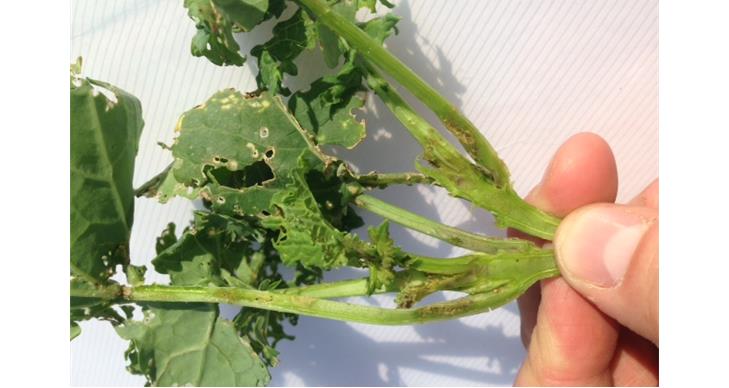
The NFU has said it will persist in applying for the emergency use of neonicotinoid seed treatments on behalf of farmers facing pressure from cabbage stem flea beetle.
This follows Defra’s announcement yesterday afternoon that Farming Minister George Eustice has decided not to accept the NFU’s most recent applications.
Read Complete Article
May 17, 2016
From: 92.1 WLHR Lake Hartwell Radio
MJ Kneiser
***
A complete analysis of the survey data will be published later this year. The abstract for the analysis is at http://beeinformed.org/results-categories/winter-loss-2014-2015/.
More information about ARS honey bee health research and CCD can be found at www.ars.usda.gov/ccd.
Read Complete Article
May 16, 2016
From: Agweek
By Jonathan Knutson, Agweek
GRAND FORKS, N.D. — The federal government and U.S. beekeepers now know a little more about the number of honeybee operations nationwide. The newly released, first-of-their-kind statistics, which help set a baseline, should be of more value later when new quarterly and annual numbers are available.
For now, what’s known is that the number of U.S. colonies, at operations with five or more colonies, totaled 2.59 million on Jan. 1, down 8 percent from 2.87 million a year earlier, according to the National Agricultural Statistics Service, an arm of the U.S. Department of Agriculture.
May 13, 2016
Next page
Previous page
