DAVIS–“Truth or Myth: Neonicotinoids and Their Impact on Pollinators: What Is the Science-Based Research?”
That’s the topic of a special conference–open to the public –set from 10 a.m. to 4 p.m., Wednesday, Sept. 9 at the UC Davis Conference Center, 550 Alumni Lane. UC Davis researchers and state officials will address the crowd, announced conference coordinator Dave Fujino, director of the UC Davis-based California Center for Urban Horticulture.
There is no evidence that a strong type of pesticide is causing a decline in bee populations, a Shropshire farming chief has claimed.
The Government has temporarily lifted a ban on neonicotinoid in certain parts of the country despite an EU-wide moratorium.
Studies have claimed the pesticide is harmful to bees, but NFU regional director for Shropshire Rob Newbery, said there is “no compelling evidence” that it is having an impact.
He said: “Damage caused to crops by cabbage stem flea beetle is a widespread problem on a national scale and neonicotinoid seed treatments are vital to provide protection from these pests.
West Australian researchers say the discovery that a bee fungus can be transmitted through sex could have major consequences for worldwide bee breeding programs.
Scientists from the Centre for Integrative Bee Research (CIBER) at the University of Western Australia found that a fungus that causes dysentery in bees, known as Nosema apis, can be sexually transmitted from affected male worker bees to the queen.
Nosema apis can reduce productivity in honey bees because sick male bees are less likely to leave the hive to collect pollen than healthy bees.
John P. Burand, Microbiology, told a legislative hearing in Boston looking at the collapse of honeybee hives in the state that banning chemicals called neonicotinoids only addresses part of the problem. He said Varroa mites are the top cause of bee colony collapse. Boston Globe
I don’t know for certain whether neonicotinoids are as effective at combating flea beetle infestations as Sekullic’s picture suggests. However, I’m definitely leaning in that direction after seeing Sekullic’s tweet, as well as the reactions that producers and other agronomists had to it.
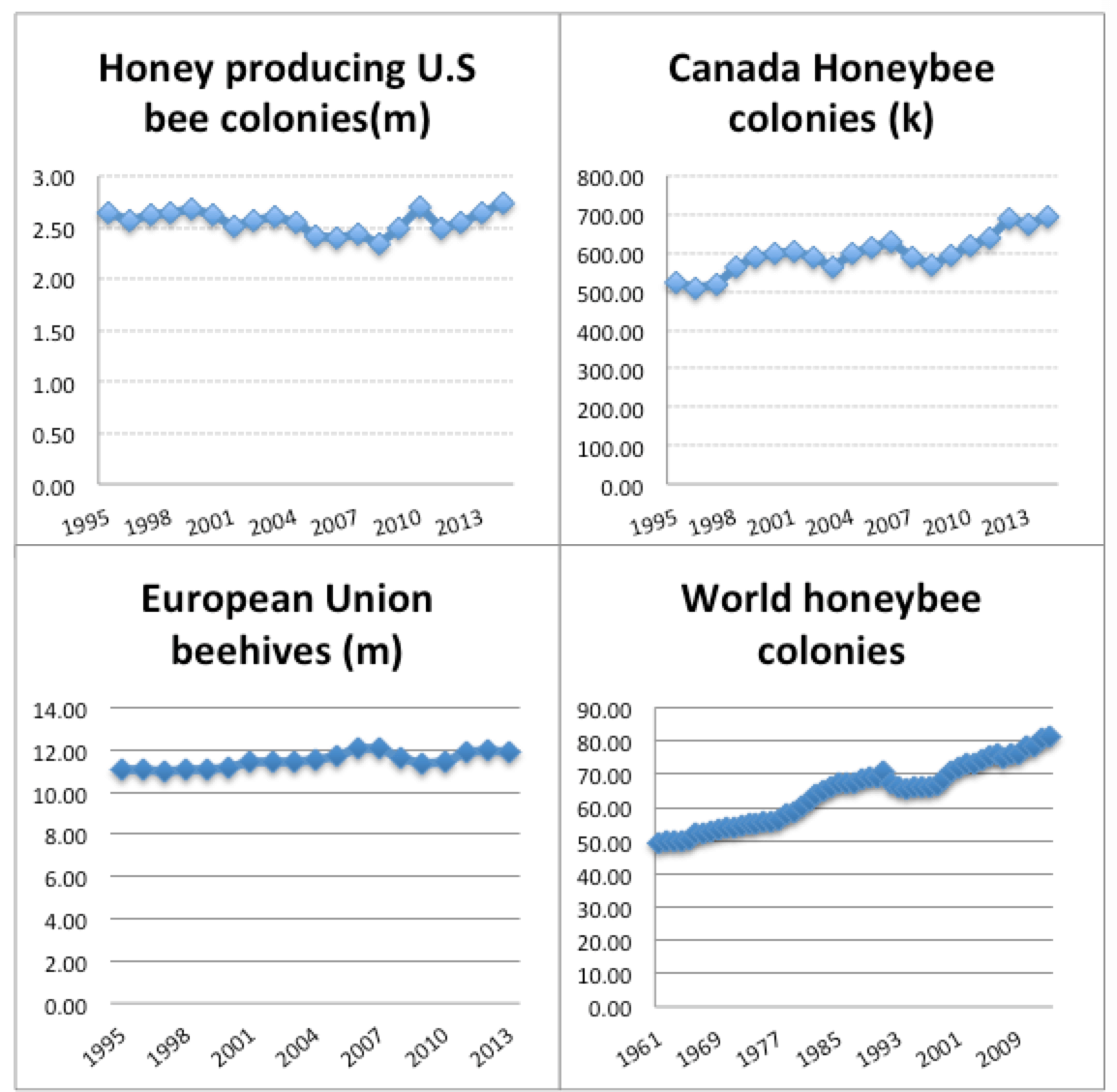
Furthermore, the worldwide trajectory for bee colonies has been upward for over half a century. Honeybees are not on the verge of extinction or irreversible decline and the world will not face mass starvation. That’s just scare rhetoric.
***
Lab vs. Field: Realistic studies and real-life experience demonstrate pesticides and bees co-exist
Large-scale field studies – four in Canada, one in the UK, four in Europe, most done under Good Lab Practices — have reached the same conclusion: there is no observable adverse effect on bees at the colony level from field-realistic exposure to neonicotinoid-treated crops.
Nine years ago beekeepers were worried a “Beemageddon” was on the way with hives everywhere collapsing. The loss of honey bees was putting $15 billion in crops US honey bees pollinate on the line. In a slice of good news, it looks like honey bees are on the up.
This month the USDA reported that the bee colony count in the States went from 2.4 million back when “colony collapse disorder” (or CCD) started in 2006 to 2.7 million last year. This is the most hives they seen since 1994.
The U.S. EPA is extending the comment period on its proposed plan to prohibit the use of all highly toxic pesticides when crops are in bloom and bees are present under contract for pollination services. Initially released on May 29, 2015, the plan also recommends that states and tribes develop pollinator protection plans and best management practices.
The 30-day extension ends on August 28 and will be announced in the Federal Register.
***
As you can see, the number of honeybee colonies has actually risen since 2006, from 2.4 million to 2.7 million in 2014, according to data tracked by the USDA. The 2014 numbers, which came out earlier this year, show that the number of managed colonies — that is, commercial honey-producing bee colonies managed by human beekeepers — is now the highest it’s been in 20 years.
Farmers in limited parts of the country will be able use neonicotinoid seed treatments this autumn after the Government accepted an emergency application by the NFU.
The NFU has secured the emergency use of neonicotinoid seed treatments this autumn over a limited area of around 30,000ha where the pest cabbage stem flea beetle poses the biggest threat.
Following a second submission by the NFU to the Chemicals Regulation Directorate (CRD), the Government has agreed to allow farmers to use neonicotinoid seeds over five per cent of the oilseed rape (OSR) crop.