Canadian Pest Management Regulatory Agency needs more collaborative approach
From: Western Producer
Leave a Comment March 24, 2017
From: Western Producer
Leave a Comment March 24, 2017
From: Roanoke Times
***
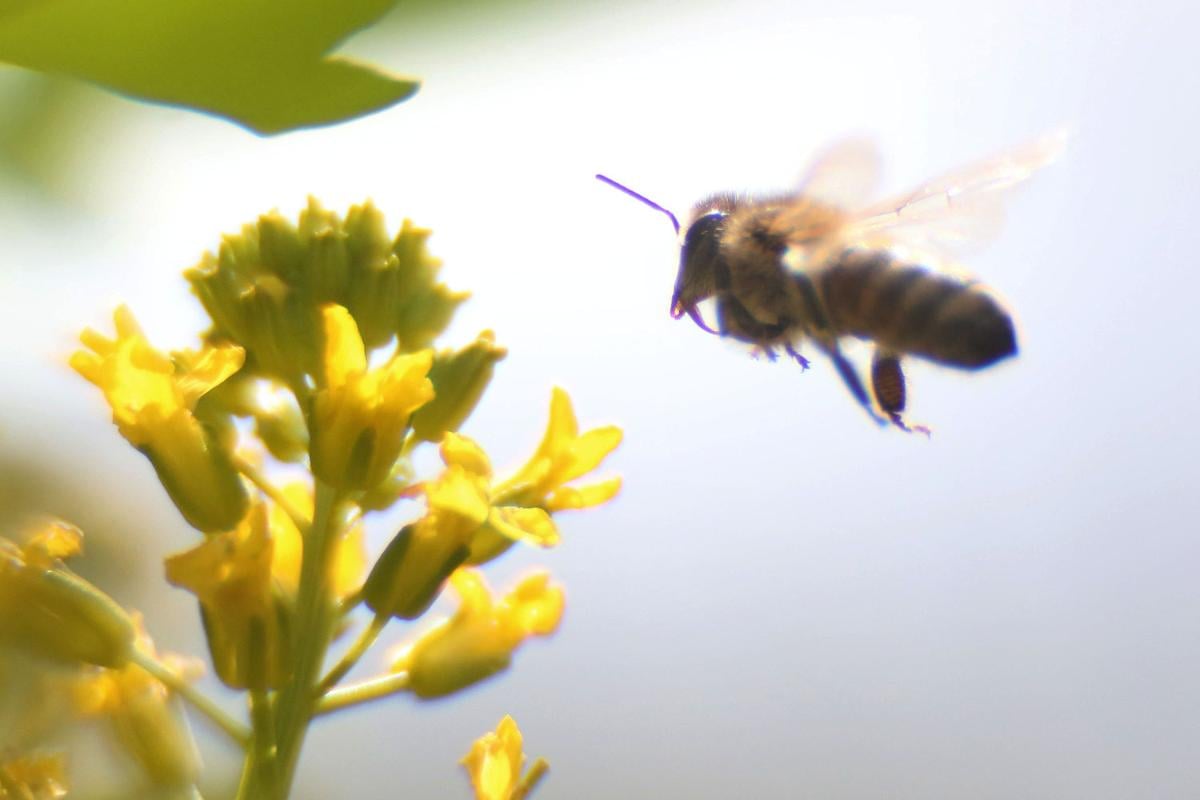
In Virginia, as in other states, honeybee colonies have over the past 20 years been dying at a high rate. Nationally, researchers are still working to narrow down possible causes, and to better understand the combination of factors that may be responsible.
Historically, fewer than 10 percent of the commonwealth’s hives died annually, state apiarist Keith Tignor has said. But since the invasion of two parasitic mites — tracheal mites and Varroa destructor mites — in the 1980s, honeybee colonies have died at much higher rates. Statewide, 46 percent of colonies died in 2015, according to Tignor.
Leave a Comment March 23, 2017
From: Manitoba Co-Operator
By
Mark Brock, chairman of Grain Farmers of Ontario, told the Commons agriculture committee that replacement for imidacloprid is far more expensive and less effective.
“There are no alternatives in the marketplace or in the technology pipeline that provide the same level of protection and safety,” he said.
Leave a Comment March 22, 2017
Editor’s Note: The complete study “Chronic exposure to a neonicotinoid increases expression of antimicrobial peptide genes in the bumblebee Bombus impatiens” by William R. Simmons & David R. Angelini is available here.
From: Colby College
By Gerry Boyle ’78
***
“We got data and we got the answer to the question,” Angelini said of the study published March 21 in the journal Scientific Reports, which is affiliated with the prestigious journal Nature. “The surprising thing scientifically was that we had an effect of pesticide exposure—but in the opposite direction of what we had predicted.”
Leave a Comment March 21, 2017
Editor’s Note: See here for more information on the essential role of government scientists in advancing American agriculture.
From: Delaware Department of Agriculture
Dover – The Delaware Department of Agriculture announced today that they have hired a new State Apiarist, Meghan McConnell, a native of Millville, NJ. In her position, Meghan will be inspecting bee colonies, conducting surveys for the presence of honey bee parasites, and is responsible for securing samples of suspect colonies to determine suitable measures to control and/or eradicate disease. The State Apiarist supervises the colony registration program and certifies honey bee colonies that enter or exit the state.
Leave a Comment March 20, 2017
From: PLOS One
Antoine Jacques, Marion Laurent, EPILOBEE Consortium, Magali Ribière-Chabert, Mathilde Saussac, Stéphanie Bougeard, Giles E. Budge, Pascal Hendrikx, Marie-Pierre Chauzat
Leave a Comment March 17, 2017
From: USDA/ARS
 Science Detectives Investigate a ‘Mitey’ Big Problem
By Jan Suszkiw
U.S. Department of Agriculture (USDA) scientists are hot on the trail of a honey bee killer, and their detective work has taken them from hives in Tucson, Arizona, to those in Bismarck, North Dakota.
***
The Varroa mite is public enemy number one to not only honey bees nationwide, but also the 90-plus flowering crops that depend on the insects to pollinate them, including apples, almonds, blueberries and cantaloupe.
Leave a Comment March 16, 2017
From: Xinhua
VIENNA, March 14 (Xinhua) — Austria is to see enormous losses to its bee population this year, with experts anticipating a high death rate, the Krone newspaper reported on Tuesday.
***
In addition, he said the phenomenon will be seen across the entire European Union.
***
Boigenzahn said the notably cold 2016/2017 winter would not have had much effect, with bees able to withstand significant cold particularly with stable temperatures. Instead, mites are mostly responsible, particularly the varroa destructor variety.
Leave a Comment March 15, 2017
From: ABC News | Rural
By Anna Vidot

The race is on to prepare Australian bees to survive any future incursion of varroa mite.
The parasite has spread around the world, causing colony collapse and threatening agricultural industries that rely on bees for pollination.
Dr Emily Remnant, a research scientist based at the University of Sydney, has received the Agriculture Minister’s science and innovation award in recognition of her work.

Read Complete Article
Leave a Comment March 14, 2017
From: Genetic Literacy Project

Monarch butterfly numbers in North America have decreased and the rate of over-winter honey bee colony loss has doubled in recent years. GMO crops and pesticides such as neonicotinoids have been blamed, but what does the most up-to-date science have to stay about their relationships with these important pollinators? It’s complicated, says Dr. Ric Bessin, an entomology professor at the University of Kentucky, but a host of other factors, from monarch habitat loss in Mexico to parasitic mites in bees, are likely more important.
Hosted by Dr. Paul Vincelli.
Leave a Comment March 13, 2017
